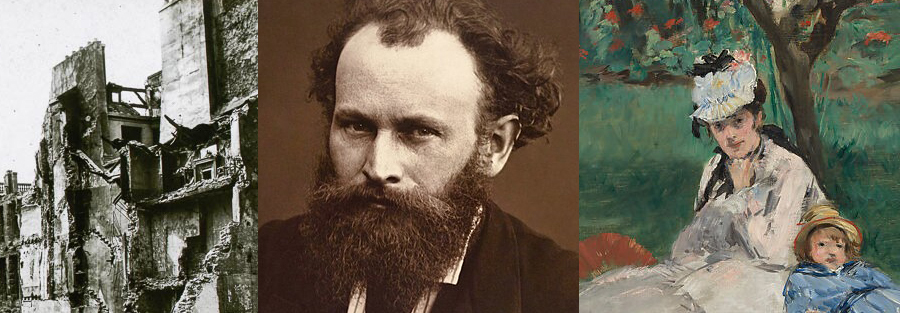
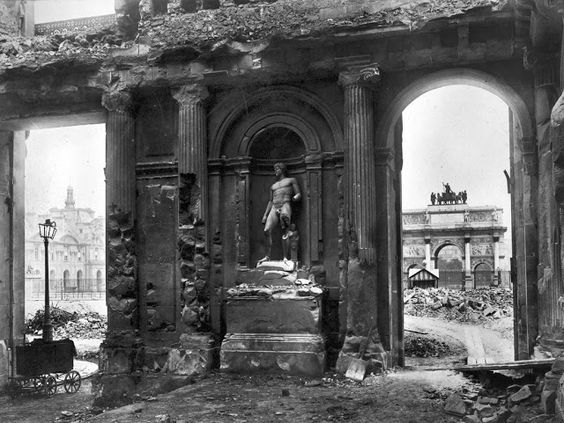
A silence of death reigned over these ruins…No clatter of vehicles, no shouts of the children, not even the song of a bird…An incredible sadness invaded our souls.
— Théophile Gautier
Manet looks at Civil War
In 1872, rubble and debris could be seen all over Paris. Only a year after the disastrous Franco-Prussian war and subsequent civil war, the economy was a wreck. The city would remain a vast construction site for the rest of the decade.
Because the recent events were so emotionally devastating, most French artists avoided those awful days as subject matter. But not Édouard Manet.
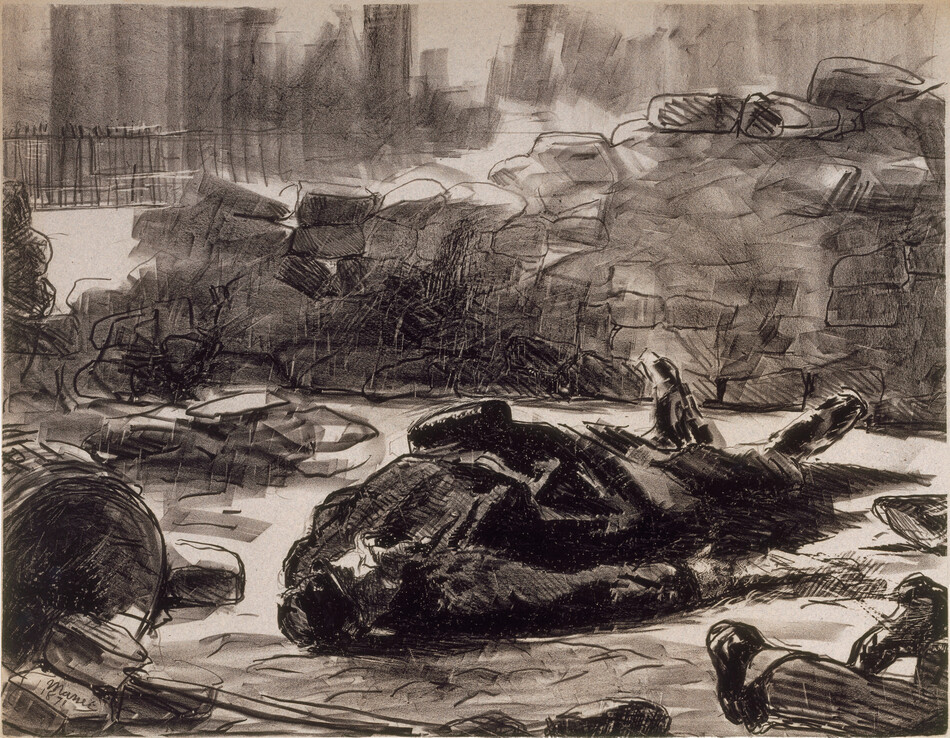
Inspired by Goya’s suite of etchings, The Disasters of War (from the early 1800s), Manet documented the suffering of the Parisians during their Terrible Year. His lithograph, Civil War (Scene from the Commune of Paris) was based on sketches he made in the grim aftermath of a battle against federal forces in late May 1871. We can see at the center a dead, heroic Communard behind a stone barricade. In the lower right corner are the legs of a civilian victim.
Continue reading