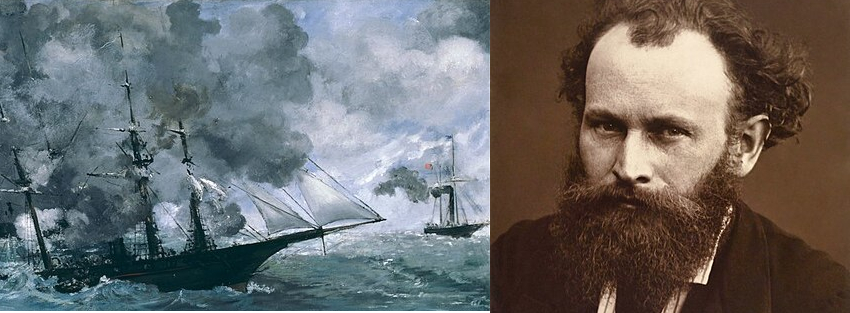
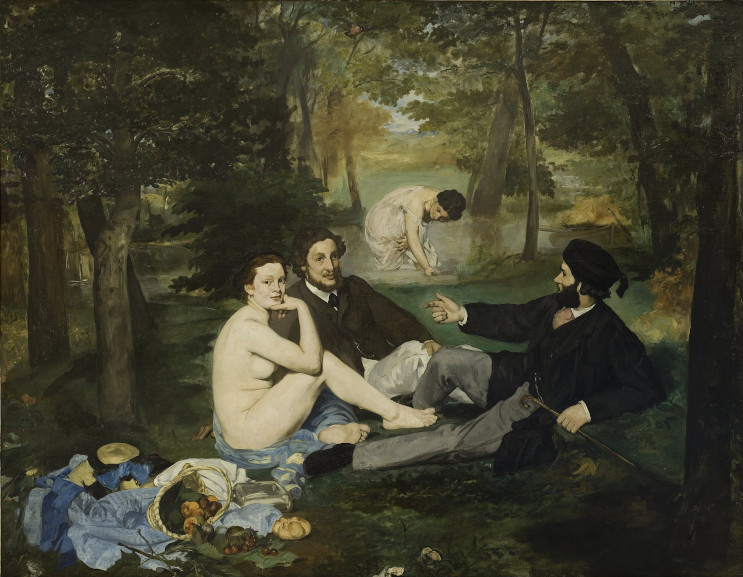
In June 1864, the painter Édouard Manet was trying to recover from the brutality of the critics’ response to his Salon entries that January. This had followed on the heels of being treated as a laughingstock the year before when he exhibited a painting that became infamous in Paris, Le Déjeuner sur l’herbe (Luncheon on the Grass), at the Salon des Refusés (the Salon of the Refused). Despite his desire to be accepted by the academic community, Manet found himself described as a radical artist, ignorant of the basic tenets of art. Somewhat bewildered, he was searching for a subject that could revive his reputation and ensure his admission into the next Salon.
What was the Salon?
In today’s art scene with its myriad pathways for exhibiting, the importance and power of the Salon is hard to comprehend. Begun in the early 1800s to show off the work of academic prize winners in the Louvre’s Salon de Carré (hence its name), by the 1860s it had become essentially the only exhibition in Paris that mattered. If you were a young artist, you had to be accepted to the annual Salon to receive any kind of notice. An academic jury consisting of members of the Ecole de Beaux-Arts and prizewinning artists from previous Salons served as either your gateway to a future in art or your roadblock. The judges expected paintings with historical, uplifting subject matter or scenes from mythology. All submissions were expected to be “skilled,” in other words, have a polished, finished appearance.
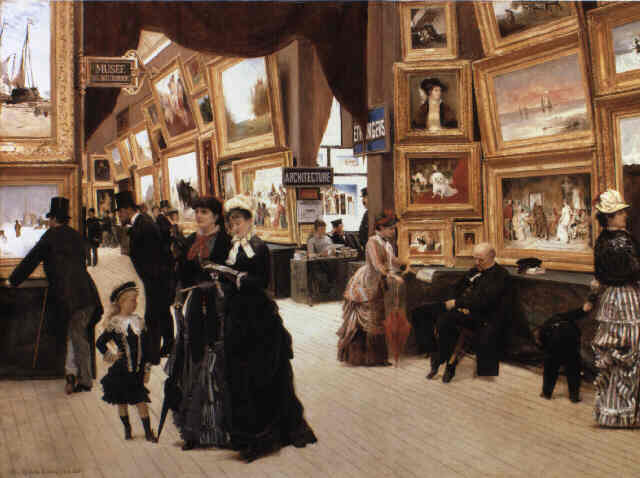
Unfortunately, acceptance to an annual Salon was only the first step. Where and how your work was hung in its many rooms also mattered. In the 19th century, artworks were displayed in rows stacked up along the walls. A small painting hung high near a doorway would never attract notice, while a work placed at eye level in a grand room could mean a great deal to an artist’s reputation.
The Battle
While preparing for the annual family vacation along the Normandy coast of France, Manet read in the Paris newspapers about an exciting naval battle of American ships that had just taken place off the harbor of Cherbourg. In one of the most important sea battles of the American Civil War, the Union’s USS Kearsage, which had crossed the Atlantic on a mission to sink one ship — the Confederate navy’s CSS Alabama — finally caught it.
Continue reading