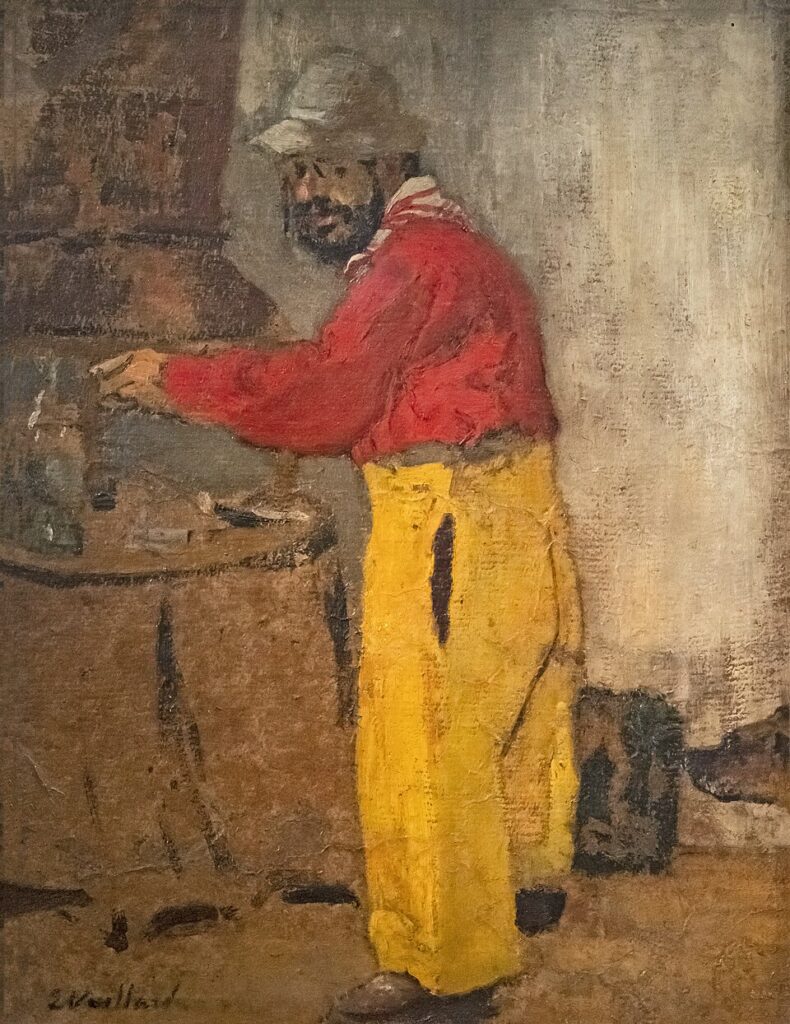
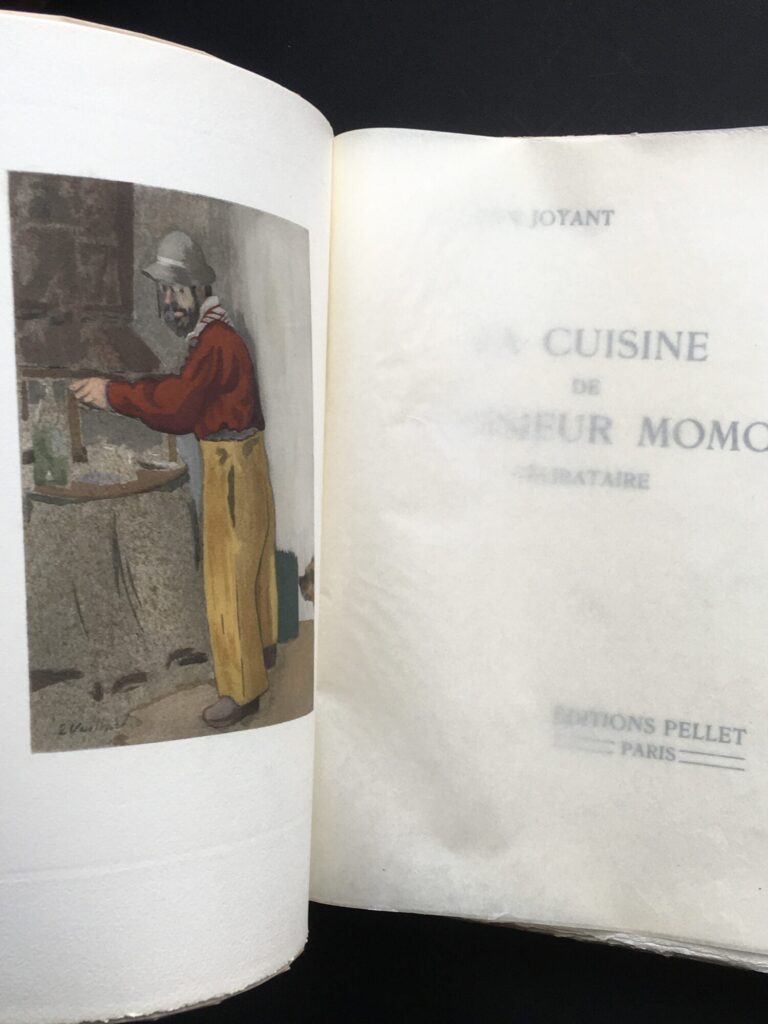
In 1898, Edouard Vuillard made an odd little painting showing Henri de Toulouse-Lautrec at work — but not in his studio — in a kitchen. Lautrec glances towards us while hovering over a hot stove dressed in a gray hat, red shirt, and bright yellow rain pants. While this is not the Toulouse-Lautrec the world knows – it was a scene very familiar to his closest friends.
Since his death in 1901, Toulouse-Lautrec has been one of the rare examples of an artist just as famous for his life story as for his pictures. The eldest child of an old, distinguished aristocratic family, he is known for his odd physical appearance. Raised to love horses and riding, he broke his left leg in a fall when he was 13, then the other a year later. Those injuries forced him to stay in bed for many months. (It was at this time that he began to draw seriously.) Neither leg ever healed properly nor grew any longer. This resulted in him ending up as a normal adult above the waist, but not much more than 4 ½ feet tall.
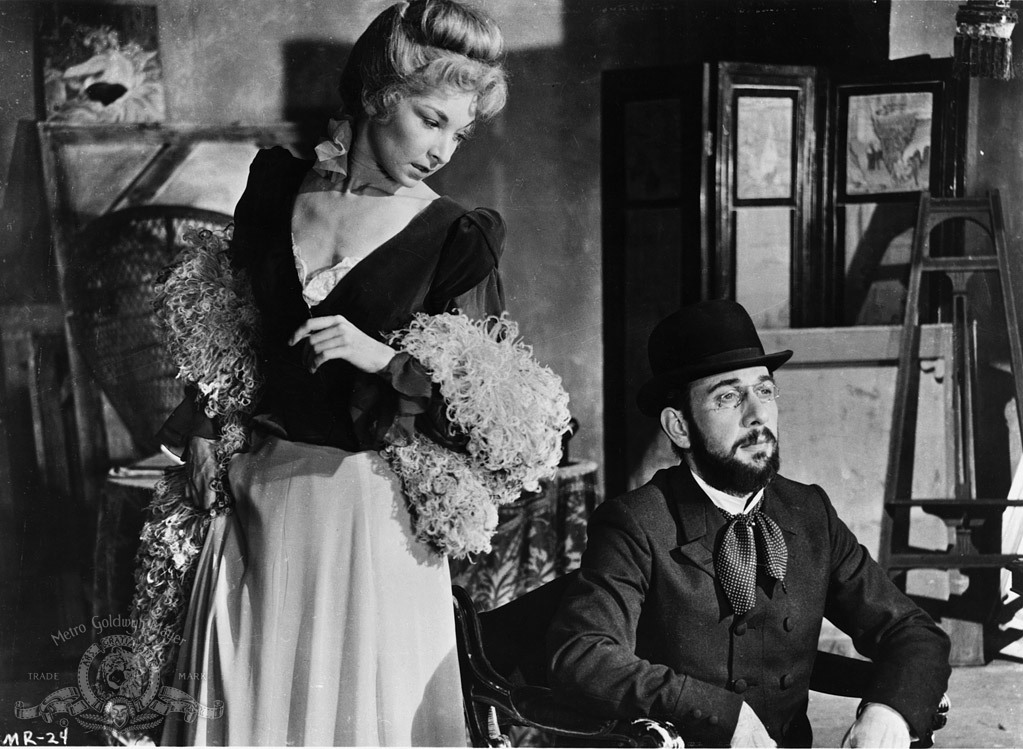
No longer able to join in the vigorous outdoor riding and hunting life of his father, the Count, Henri felt out of place and an embarrassment. At 17, he left their beautiful estate in the south of France to live in the seamier parts of Paris amongst the prostitutes and cabaret entertainers who accepted him as he was. His career portraying them in prints and paintings became the subject of a popular novel and then successful 1952 Hollywood film, “Moulin Rouge,” starring José Ferrer in an Oscar nominated role.
Vuillard’s “Portrait of Toulouse Lautrec, in Villeneuve-sur-Yonne, with the Natansons” shows the artist in the midst of one of his favorite activities. While we can’t know for sure what he’s cooking, the Natansons’ children later guessed it was one of his favorite recipes – Lobster Americaine. In Lautrec’s version, the lobster is cut into pieces while still alive then sauteed in its shell. It is served in a rich tomato and garlic sauce.
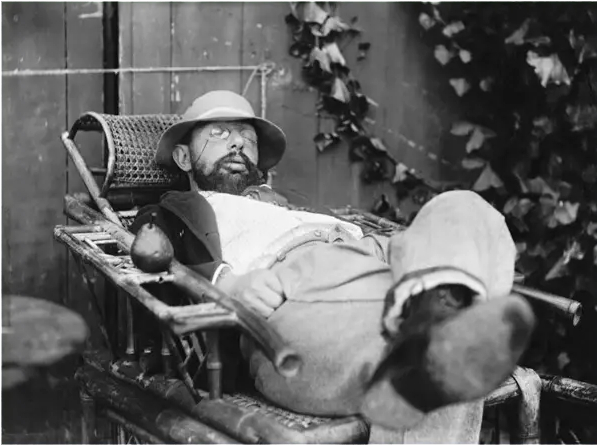
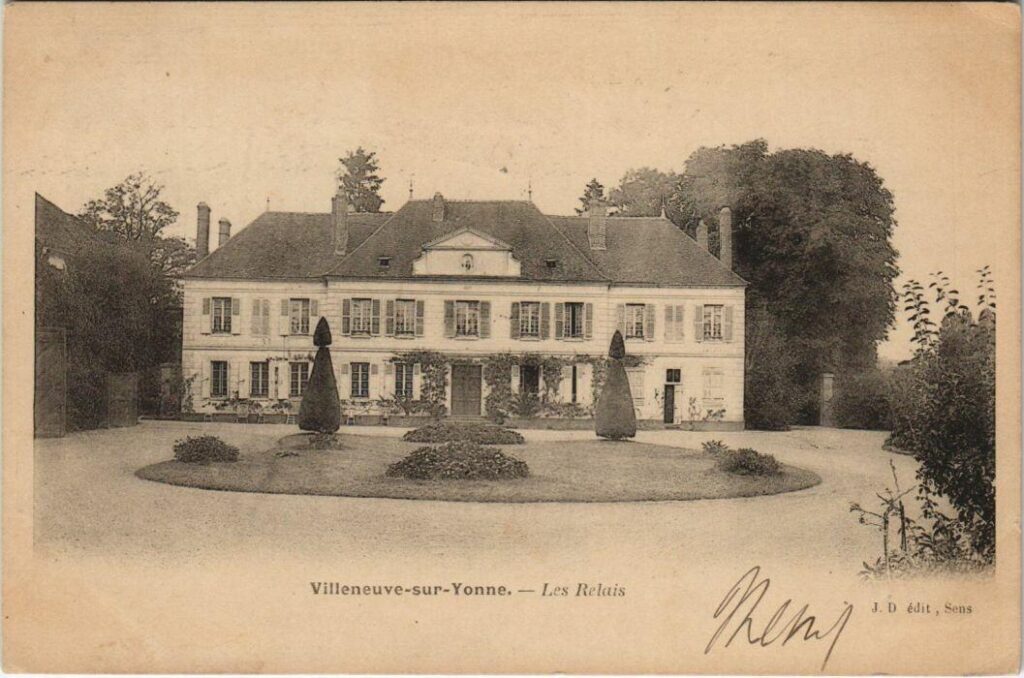
At the time of this painting, Lautrec was vacationing at Les Relais, the country estate of Thadée and Misia Natanson, about 75 miles southwest of Paris. He was in the midst of an attempt to recover from his debilitating alcoholism. His friends, the Natansons, were always willing to provide him with a refuge away from the temptations of Paris and nurse him through the inevitable withdrawal symptoms. These could be quite disturbing. A year before, in another attempt to cure himself at this house, he became convinced that spiders were jumping from the walls and crawling all over him. He even started shooting at them. On another day, he imagined that the police were chasing him around the house.
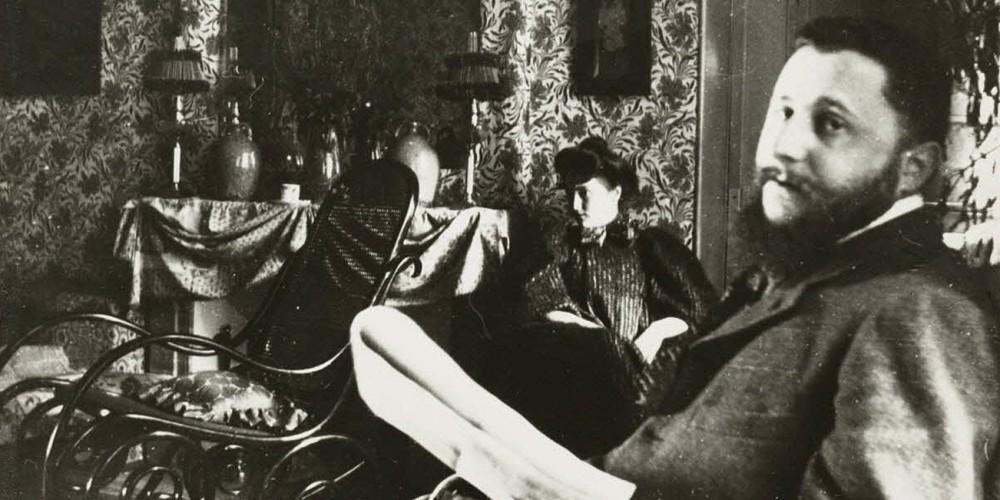
The Natanson family
Thadée Natanson and his brother Alexandre were founders of La Revue Blanche (The White Review), one of the leading cultural publications of the Belle Epoque. Their offices are where Vuillard and Lautrec first met when contributing illustrations. As Vuillard later wrote, “La Revue Blanche brought us all together – painters, critics, singers, writers – the whole Montmartre group.”
The Natansons were important patrons of the arts in the late 1890s and hosted many gatherings at Les Relais, as well as their home in Paris. Among their regular guests were some of the central figures in French literary life – Marcel Proust, Stéphane Mallarmé, Apollinaire, and Alfred Jarry. Thadée’s lovely young wife Misia was a muse to many painters, especially Vuillard and Pierre Bonnard.
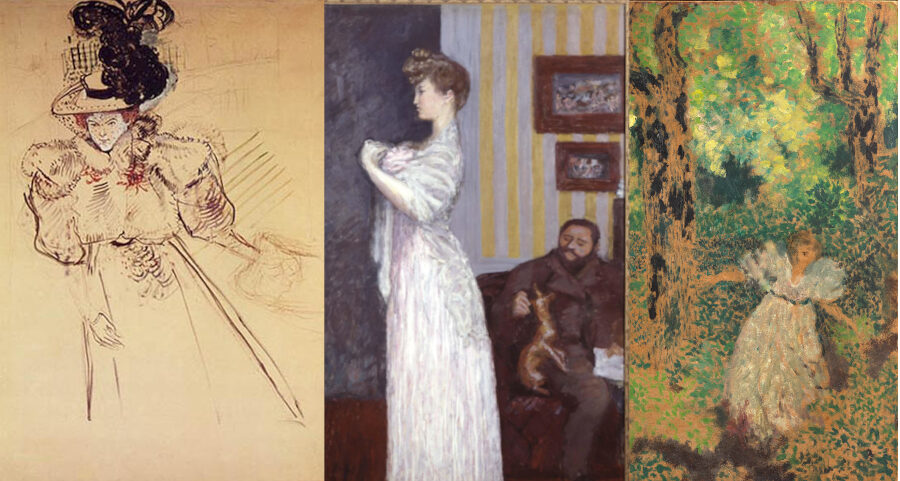
Lautrec’s social life
There is a popular misconception that Toulouse-Lautrec was a lonely man who haunted bordellos and cafes. While he certainly spent many evenings (and some mornings) enjoying those establishments, he had a lively social life filled with friends from all ranks of Parisian society – writers, artists, doctors, aristocrats, financiers, musicians and composers.
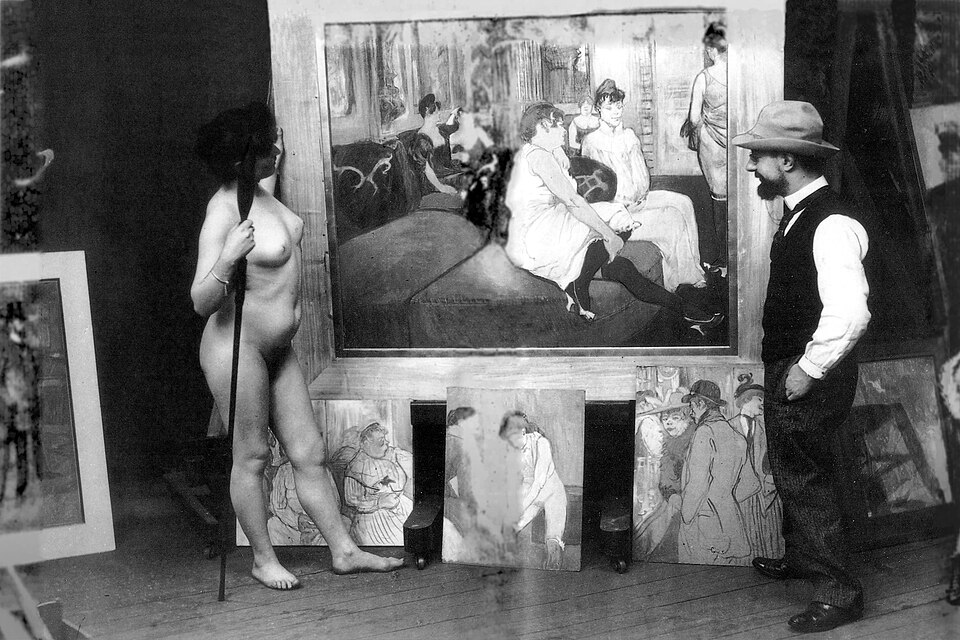
Cooking delicious meals was a way to thank his friends and one of Lautrec’s greatest pleasures, a task he embraced with his whole heart. If he was welcoming the return of a friend, celebrating a new exhibition, or had just published a suite of prints, he would host an elaborate party. He drew up sumptuous multi-course menus – decorated with fanciful drawings and filled with dishes and cocktails of his invention.
An unforgettable evening
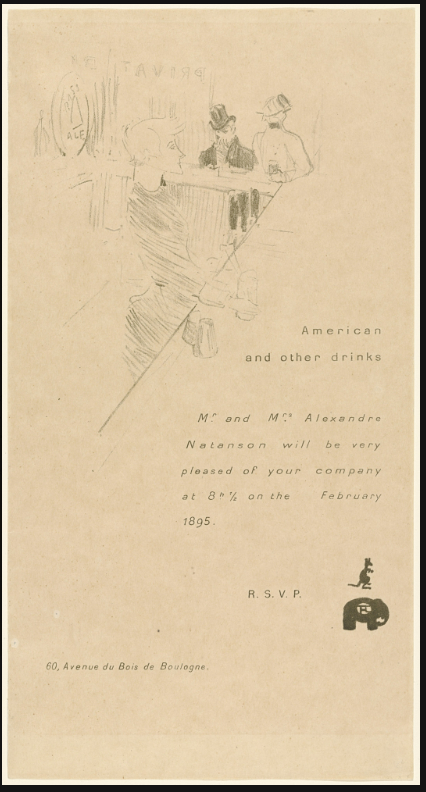
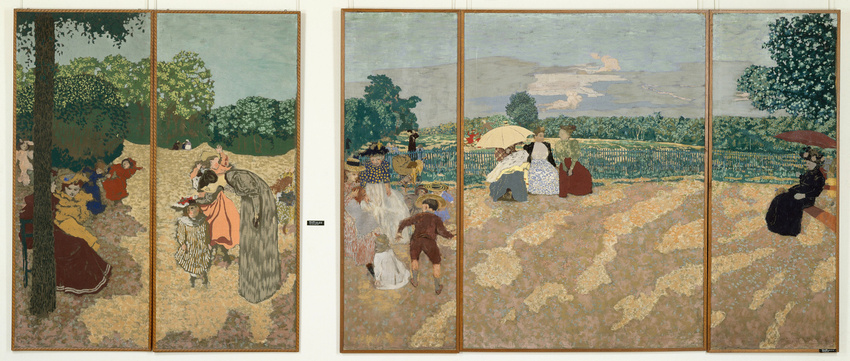
One particular banquet in February 1895 became legendary. Held at Alexandre Natanson’s Paris home for 300 guests, it celebrated the installation of new decorative screens commissioned from Vuillard.
Lautrec insisted on being completely in charge. His hand-drawn invitation announces, “American and other drinks.” He wore a chef’s white linen jacket and shaved his head and beard off for the event. Trays of hors d’oeuvres created to Lautrec’s specifications circulated before guests sat down to a long evening meal of many courses. It is believed that more than 2,000 specialty cocktails were served. What seems most incredible is that Lautrec was the only chef and bartender that night. A sign over the bar cautioned “Don’t speak to the man at the wheel.”
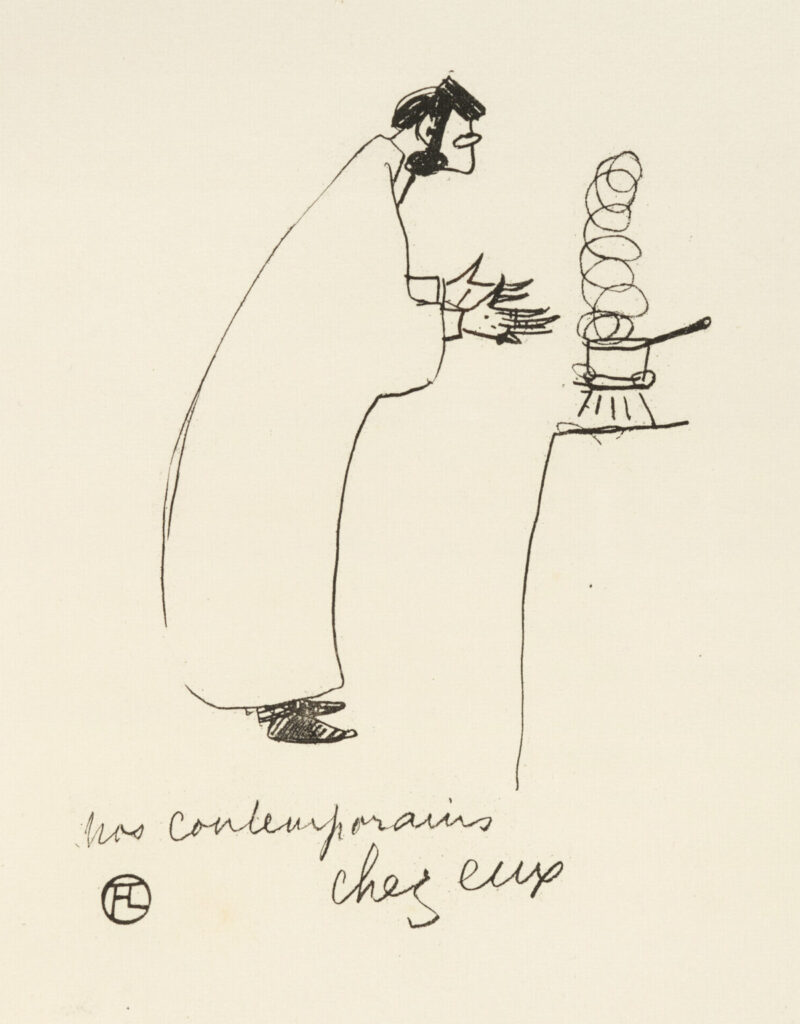
As for what the menu may have been, we know from his other feasts that he favored the rich cuisine from Languedoc in southwest France where he had grown up. For Lautrec, cooking was a lifelong pursuit. Even before he began drawing, his family’s nickname for him was “Henri the Cook.” Seafood, game (like quail and pheasant – often sent by his mother from the family estate), roasts, pâtés, and sauces were always paired with wines and special cocktails. Most meals finished with fancy desserts.
A special dessert
However, Vuillard remembered one meal in 1897 where Lautrec marched his guests after the cheese course to a nearby collector’s house to show them a painting by Degas, and said, “Voilà! Votre dessert!” (“This is your dessert!”)
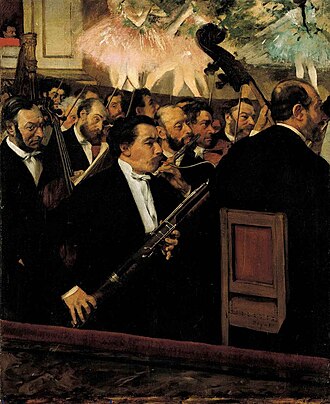
The final course of Lautrec’s dinner was quite a treat – a look at one of Degas’s greatest works – The Orchestra of the Opera. Today, it is hanging in the Musee d’Orsay. [For icing on the cake, it is also Degas’ first painting with ballet dancers.]
At the center of the painting is Désiré Dihau, who commissioned the picture and was a bassoonist with the Paris Opera. His family were not just friends but cousins of Lautrec and had a few of Degas’ paintings in their home. He and his siblings thrilled Henri by not only allowing him to study these pictures but also by introducing him in 1891 to the artist he idolized above all others. While Degas was publicly dismissive of Lautrec and at times quite cruel, once when Dihau privately showed him a drawing by his cousin, Degas said, “To think a young man made this, while we have worked so hard all our lives!”
The elements
Toulouse-Lautrec was both imaginative and very particular about each ingredient in his recipes, as we can see in a letter to Jacques Bizet (whose father composed “Carmen”):
Dear master, here is the list of fish to be obtained, Eels (one pound), 2 gurnards, 1 hake, 1 sole, 1 small lobster. Seasonings: garlic, cayenne pepper, olive oil. Have all this at 5 o’clock Sunday. We will be there at 6.15.
He was also a connoisseur of wines. His family’s chateau had an extensive wine cellar with bottles stored for generations. Lautrec would clap his tongue against his palette when tasting a vintage he found especially delicious.
Cocktails
Lautrec delighted in not just creating new dishes but also inventing cocktails for his parties. Some writers credit him with starting the fad for them in Belle Epoque Paris; mixed drinks previously being unusual. One concoction, aptly named Tremblement de Terre (Earthquake) combined generous quantities of absinthe and cognac served in a wine goblet. His Maiden’s Blush was a mix of absinthe, red wine, bitters, mandarin liqueur, cognac, and champagne. What he called a “solid” cocktail included sardines.
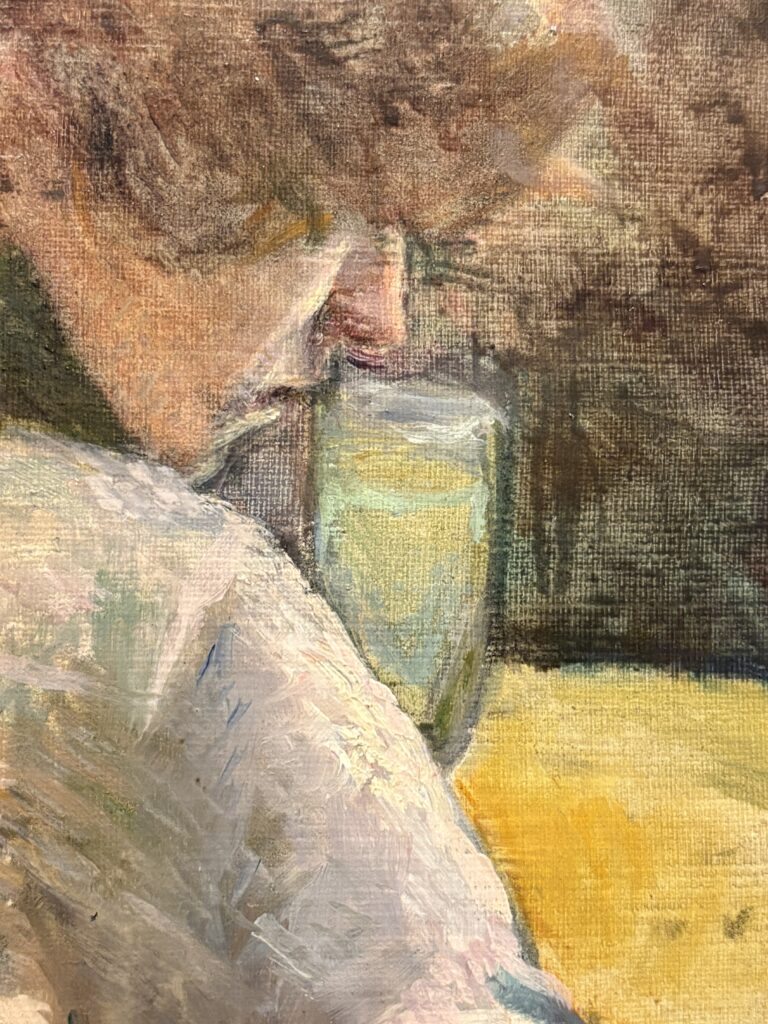
Henri’s studio included a well-stocked bar. He believed cocktails were essential for any serious contemplation of his paintings. One of his menus lists the drinks available for an evening’s meal: “champagne, port, aperitif wines…eaux-de vie…Armagnac, calvados, whisky, gin…” Even when visiting a café, Lautrec carried a little grater and a nutmeg to flavor drinks to his taste.
As for water, he detested it. One of his mottos was “alcohol or thirst!” When asked to include some for a meal, he was known to put a goldfish in each table’s carafe.
Lautrec’s Menus
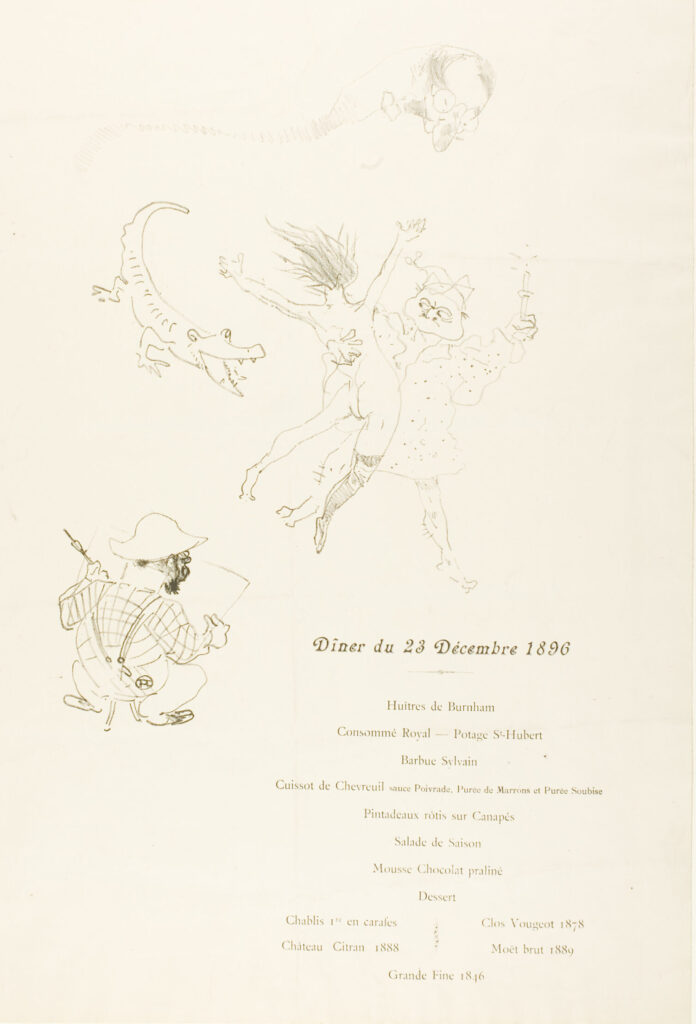
For Lautrec, the menu was an essential creative element for a special meal – both for the content and visually. The Crocodile Menu, from December 23, 1896, is a good example. The decoration was inspired by a visit he and some friends made to the Château de Blois the month before, where Marie de Medici had been exiled by her son, the king, in 1617. Lautrec loved the story of the queen mother making a daring nighttime escape from a window.
On Lautrec’s menu, the queen jumps wearing nothing but one black stocking and is saved by one of his friends, Maurice Guilbert, in his night shirt. (Guilbert took many of the best-known photographs of Lautrec.) The artist can be seen sketching the scene from below, while a smiling crocodile watches the scene at the top, along with one of Lautrec’s favorite dining companions, his cousin, Gabriel.
We can also see the seven-course banquet (entirely cooked by Lautrec) supplemented by five different wines paired with the courses. After oysters, soup, and a fish dish, the main course was Roe Deer (a small type native to Europe) served with chestnut puree, followed by a roasted guinea fowl. Then came salad, dessert, and after dinner drinks.
Recipes
Lautrec enjoyed surprising guests. Among his many recipes are ones for heron, boar (which must be left out “in the winter air” for 3 days, then marinated for 3 more), eel liver, and squirrel (which he called an “exquisite taste”). After seeing a kangaroo boxing in the circus, he served a meal with its exotic meat as a main course. His Bearnaise Soup “should be so thick a spoon will stand in it.” To prepare his Stewed fillets of Porpoise, he insisted you first should be “mounted on the bowsprit of a cutter” and “have harpooned” it.
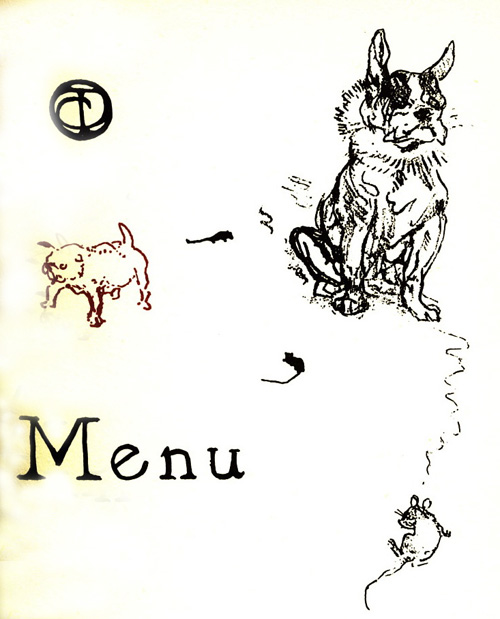
Lautrec did not shy away from cruelty. According to him, “the meat of chicken, gripped with fright” made them tender. So, he urged chasing them “into open country, and when you have made them run, kill them with a gun loaded with very small shot.”
Nor did he shy away from the bizarre. His Grasshoppers Grilled in the Fashion of Saint John the Baptist, required (naturally) tearing off their heads. Ever the connoisseur, he encouraged choosing “the most beautiful, the pink rather than the brown or yellow.”
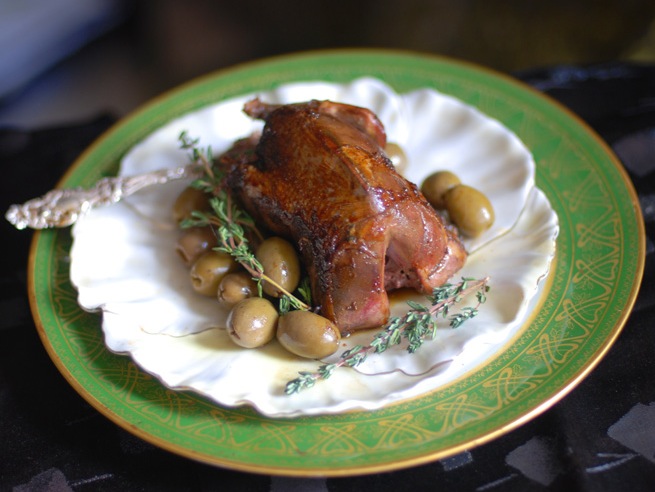
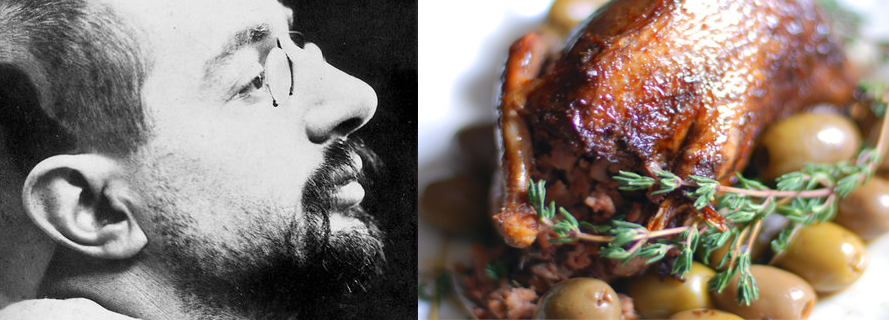
One of Lautrec’s favorite recipes, served only to special guests, was wood pigeon with olives. Each bird would be stuffed with beef, veal, sausage, pepper, nutmeg, and truffles. The game would be first sautéed, then put in a casserole in the oven. The final touch was washed and pitted green olives with some cognac. The way a friend learned someone was loathed by Lautrec was if he said, “they don’t deserve my wood pigeon with olives. They will never have it; they will never know what it is.”
His English Channel Bouillabaisse (which he admitted “is only a pale reflection” of those from Marseilles) required among its many ingredients “sea eel, angler fish or frog fish, hake, John Dory…gray gurnard, sea bream, striped mullet, whiting…chicken turbot, sole…small crayfish, lobster, Norway lobster, [and] crabs.” Lautrec insisted that it be brought to a “fierce boil for fifteen to eighteen minutes” three times.
How is it that we have such detailed recipes?
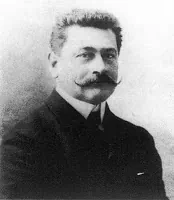
For these thorough descriptions, we can thank Maurice Joyant, Lautrec’s oldest friend. They first met when they were eight at school in Paris. All their lives, they hunted and fished together. Both came from families that took food very seriously and as adults, both shared a love of art and good eating. (Joyant first entered the Parisian scene as an art and food critic.) Together, they traveled around France and Europe discovering artistic masterpieces and exciting meals. In restaurants, they would take detailed notes on dishes they liked and how they were prepared. Along with Claude Monet, who also had a great interest in cooking, they met with friends every Friday night in Paris for dinner.
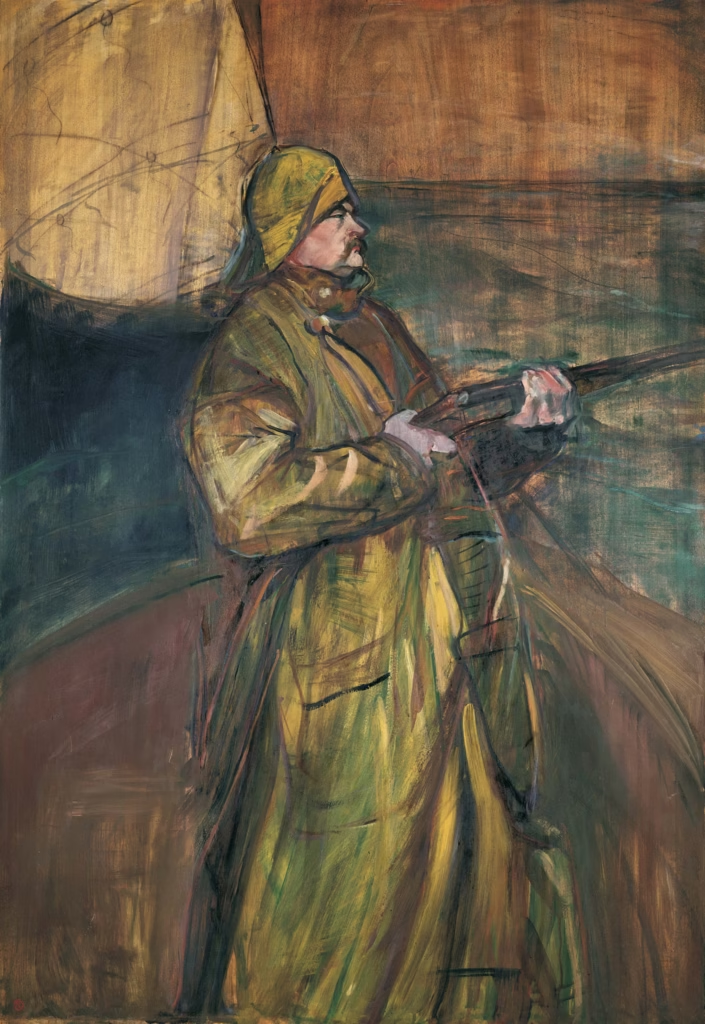
In 1890, Joyant became the director of the Goupil Gallery in Paris, replacing Theo van Gogh, who had begun his own descent into madness following the loss of his brother Vincent. Joyant used his new position to promote Lautrec’s work, organizing exhibitions in both Paris and London.
Joyant’s loyalty lasted long after Lautrec’s death at the age of 36 from the effects of alcoholism and syphilis in 1901. After he opened his own gallery, Joyant held Lautrec’s first posthumous exhibition in 1914. In 1926, he wrote the first biography of his friend.
Four years later, Joyant published a book of Lautrec’s recipes under a coded name. He called it La Cuisine de Monsieur Momo, Celibataire [The Kitchen of Mr. Momo, Bachelor – “Monsieur Momo” being Lautrec’s nickname for Joyant]. It contains not only 150 detailed recipes but memorabilia like decorated menus from the many parties that his old friend had designed. One ten-page chapter is titled “The Rainbow of Sauces.” As for the countless herbs and spices, “these are the final touches that make the dishes sing” according to Joyant. Still in print today, in 1960 it was revised and published as “L’art de la Cuisine” with Lautrec and Joyant now listed as co-authors.
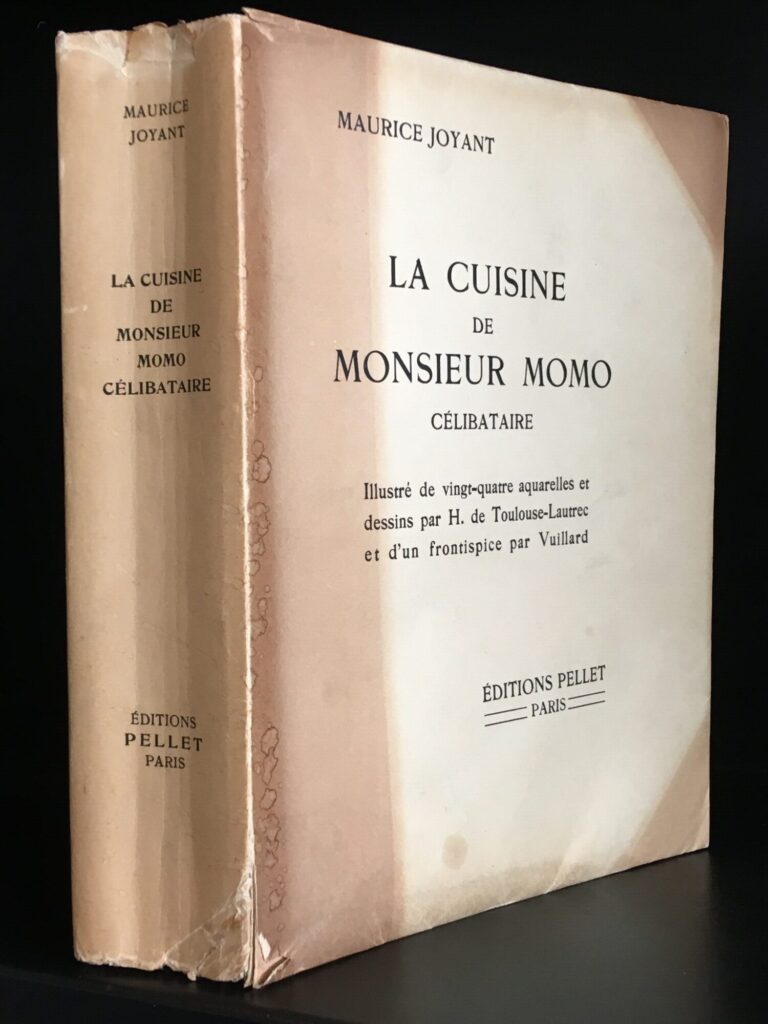
The book’s last two recipes preserve Lautrec’s sense of humor for us. The first, Saint on the Grill suggests asking the Vatican “to procure a real saint”, who will then be prepared in the style of St. Lawrence. It closes with the inscrutable Ancient Recipe: “Full of mystery. It will never be known.”
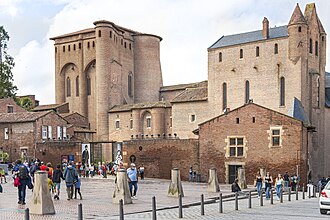
As a final act of devotion to his dear friend and at the request of Lautrec’s parents, the Count and Countess of Toulouse-Lautrec, Joyant established a permanent home for their son’s art collection. With additional contributions from Lautrec’s many friends and admirers, together they financed the Musée Toulouse-Lautrec in Albi, France, the artist’s birthplace. Housed in what was originally a 13th century bishop’s palace, its collection has expanded over the years to include more than a thousand works by or associated with him.
Today, that is where you can find the original portrait by Vuillard of Lautrec cooking which began this essay. However, if a trip to the South of France is not currently convenient, you need only open Lautrec and Joyant’s extraordinary cookbook. You’ll find the painting reproduced as the frontispiece, across from the title page.
[Posted on the 125th anniversary of the death of Henri de Toulouse-Lautrec and in memory of my dear friend Ken Oldehoff.]
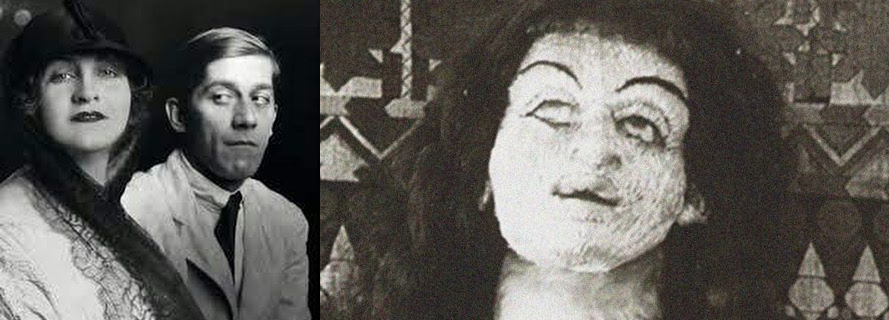 A strange, life-size doll is at the center of one of the Modern era’s most bizarre episodes. Its inspiration was the sudden end of an intense love affair between the Expressionist painter Oskar Kokoschka and the fascinating Alma Mahler.
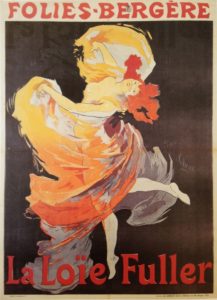
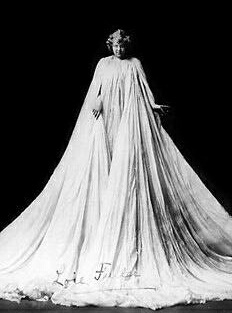 Marie Louise Fuller was born in 1862 on a farm outside of Chicago. As a young girl, she was inspired to be an actress by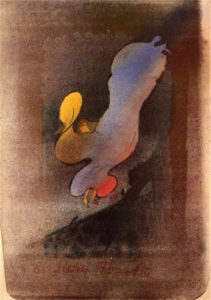
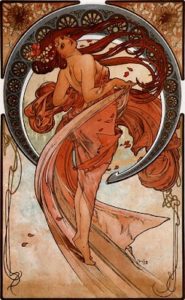
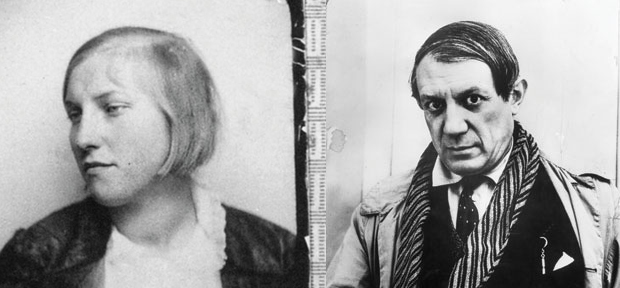 As the sun set in Paris, on January 8, 1927, Pablo Picasso was walking past a fashionable department store when his eyes fell upon a young shopper. Immediately infatuated, the artist (then unhappily married and in his mid-forties) took Marie-Thérèse Walter by the arm and said, “I’m Picasso! You and I are going to do great things together!” She was confused by the man and unaware of who he might be. Picasso introduced himself by dragging her into a bookshop and showing her a book filled with reproductions of his paintings. Thus began a passionate affair and an enormously productive period for Picasso.
 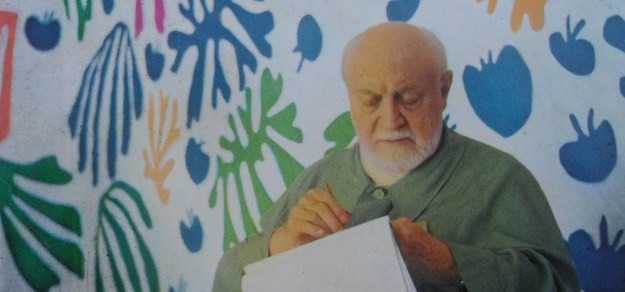 Volume 2 of our series “